Tree Trimming and Pruning Services in the Hudson Valley
Schedule an Appointment:
845-331-6782
Keep Your Trees Healthy, Safe, and Beautiful – Professional Tree Care in New York’s Hudson Valley Since 1936
Regular tree trimming is the single most important thing homeowners can do to protect their property and maintain healthy trees. Left unchecked, trees develop dead branches that drop without warning, limbs that grow into power lines, and dense canopies that block light and invite disease. Expert Tree Service provides professional tree trimming services throughout the Hudson Valley, keeping your trees safe, structurally sound, and looking their best.
Tree pruning is both a science and a craft. Done properly, it directs tree growth, strengthens structure, extends lifespan, and enhances your property’s appearance. Done poorly, or not at all, it leads to weak joints, storm damage, and premature decline. Our experienced, licensed team understand the biology of how trees grow and respond to cuts, which means every pruning decision we make supports the long-term health of your trees.
Tree Trimming vs. Tree Pruning: What’s the Difference?
People use “trimming” and “pruning” interchangeably, but in professional tree work they refer to different practices. Understanding the distinction helps you communicate what your trees need:
Tree Trimming
Trimming focuses on the outer canopy – cutting back overgrowth to maintain shape, clear structures, and keep branches away from power lines and rooflines. It’s primarily about managing size and clearance. Most homeowners need trimming every 2-3 years for mature trees, more frequently for fast-growing species near structures.
Tree Pruning
Pruning is more targeted and structural. It involves selectively removing specific branches – dead wood, crossing limbs, water sprouts, and weak attachments – to improve the tree’s internal structure, health, and airflow. Pruning requires understanding how different trees respond to cuts, which branches to keep, and where to make cuts to promote proper healing. It’s especially important for young and mature trees to develop strong architecture.
Our Tree Trimming and Pruning Services
Crown Cleaning
Removal of dead branches, dying limbs, and diseased wood from throughout the canopy. This is the most common pruning need, it eliminates falling hazards, improves tree health, and opens the canopy to light and air. Essential for mature trees that haven’t been maintained.
Crown Raising
Removing lower branches to increase clearance over walkways, driveways, structures, and sight lines. Common for street trees that have grown to obstruct sidewalks or for large trees whose limbs droop over roofs. Crown raising opens up the space beneath the canopy without affecting the tree’s overall form.
Crown Reduction
Reducing the overall height or spread of a tree by cutting leaders and long limbs back to suitable lateral branches. This is the correct way to reduce a tree’s size, never topping, which destroys structure and creates hazardous regrowth. Crown reduction is used when trees have outgrown their space or need to be brought away from power lines.
Deadwooding
Focused removal of all dead and dying wood from a tree. Important for safety (dead branches fall unpredictably), aesthetics, and tree health. Deadwooding is particularly important for large trees overhanging high-traffic areas, driveways, and play areas.
Vista Pruning
Strategic removal or thinning of select branches to open up views while preserving the tree. Common in the Hudson Valley where trees grow to block river, mountain, and valley views that homeowners value.
When Is the Best Time to Trim or Prune Trees?
Timing matters in tree pruning. The best time to prune depends on the species and your goals:
Deciduous Trees
Most deciduous trees – oaks, maples, ashes, birches – are best pruned during dormancy in late fall through early spring, before new growth begins. Pruning during dormancy reduces stress, minimizes disease transmission, and allows you to clearly see the branch structure without leaves. The growing season (late spring through summer) is acceptable for light trimming but not heavy structural work.
Conifers and Evergreens
Conifers like pines, spruces, and hemlocks have different pruning windows. Most are best pruned in late winter before the spring growth flush. Avoid pruning conifers in fall, as wounds heal slowly and disease pressure is high. Unlike deciduous trees, heavy pruning of conifers into old wood usually won’t produce new growth – they don’t regenerate from bare wood the way a woody plant like a maple or oak will.
Dead or Hazardous Branches
Dead branches can and should be removed any time of year. There’s no wrong season to eliminate a falling hazard. If you notice dead wood, cracked limbs, or storm damage, don’t wait for the “right” pruning window – call for service immediately.
How Trees Grow – And Why Proper Pruning Matters
Every tree is a woody plant that grows by adding new layers of wood each year – both outward (making the tree trunk and branches thicker) and upward/outward at the tips (extending branch length). Understanding tree growth patterns is essential for proper pruning because every cut you make directs future growth. Cut in the right place, and you encourage strong structure. Cut in the wrong place, and you trigger a flush of weak, poorly attached new growth that creates future problems.
Trees also play a vital role in the ecosystem beyond your property – they sequester carbon dioxide, provide habitat, regulate temperature, manage stormwater, and produce oxygen. Proper tree care, including regular pruning, keeps these ecosystem services functioning while also protecting your home and family. The U.S. Forest Service estimates that urban trees provide billions in annual benefits to communities through energy savings, air quality improvement, and stormwater management.
Pruning Different Trees: Species-Specific Care
Not all trees respond to pruning the same way. Our crews are trained in species-specific techniques because what works for one tree can damage another:
- Oaks – Prune only during dormancy to prevent oak wilt transmission. Never prune oaks from April through October in our region.
- Maples – Prone to heavy bleeding if pruned in late winter/early spring. Best pruned in mid-summer or after full leaf drop in fall.
- Fruit trees – Require annual pruning during dormancy to maintain production and manage size. A small tree kept properly pruned outproduces a neglected large tree.
- Evergreens/Conifers – Cannot regenerate from bare wood. Pruning must stay within the green growth zone. Timing varies by species.
- Street trees and urban plantings – Often need more frequent pruning due to restricted growing space, clearance requirements, and infrastructure conflicts.
Professional Equipment for Every Job
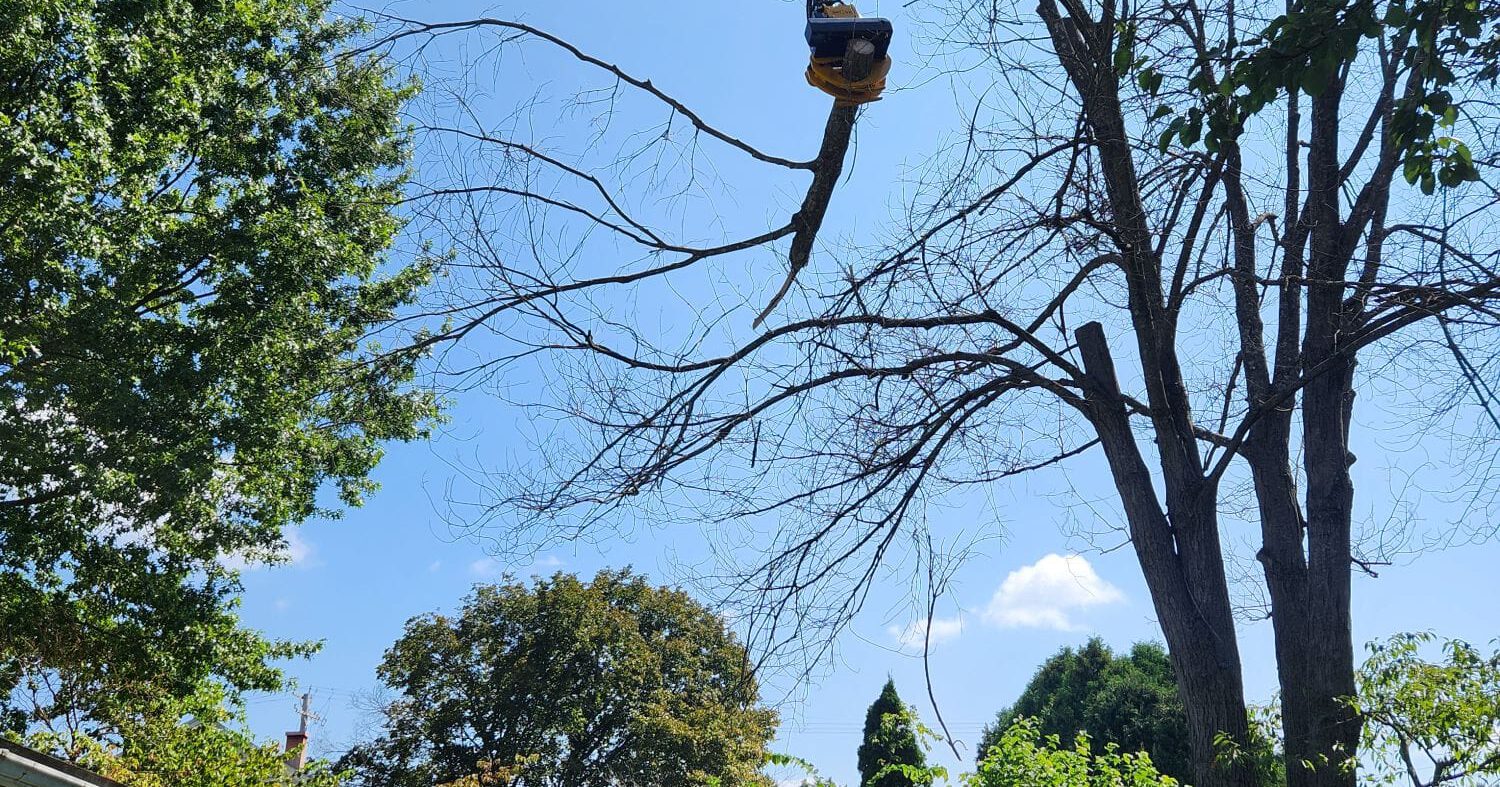
Proper tree trimming requires the right tools for the cut. Hand pruners and loppers handle smaller branches cleanly without crushing the wood. For larger limbs, we use professional-grade hand saws and chainsaws, always making proper three-cut sequences to prevent bark tearing. Bucket trucks give us safe, stable access to canopy work up to 75 feet, while our climbers reach areas trucks can’t access. Every tool is kept sharp – dull cuts crush tissue and invite disease, while clean cuts heal quickly and protect tree health.
Tree Trimming for Homes, Properties, and Municipalities
Residential Tree Trimming
For homeowners, routine trimming keeps your property safe and attractive. We work around gardens, fences, and structures with care, clean up completely, and leave your yard better than we found it. Most residential properties benefit from a trimming cycle every 2-4 years depending on tree species and growth rates.
Commercial & Municipal Tree Care
We provide ongoing tree trimming services for property managers, HOAs, municipalities, and institutions. Commercial tree work often involves managing large tree inventories, maintaining clearance standards, and coordinating with utility companies. Our crews handle street tree maintenance, parking lot plantings, and campus-wide tree care programs.
Why Hire a Professional for Tree Trimming?
It’s tempting for homeowners to grab loppers and handle tree trimming themselves – and for small trees, light trimming with hand pruners is fine. But for mature trees, trees near structures, or trees near power lines, professional tree work is essential. Here’s why:
- Safety – Working at height with saws is inherently dangerous. Our crews are trained, equipped, and insured.
- Knowledge – Knowing where to cut, how much to remove, and which branches to keep requires understanding tree biology, species behavior, and structural mechanics.
- Results – Proper pruning improves structure and appearance. Improper pruning (topping, lion-tailing, over-thinning) damages trees permanently.
- Equipment – Professional-grade tools make clean cuts that heal properly. Consumer tools often crush and tear.
- Timing – We know the best time to prune each species for optimal results and minimal stress.
Complete Tree Care Services
Tree Removal – When trimming isn’t enough and a tree needs to come down.
Cabling & Bracing – Structural support for trees worth saving.
Emergency Tree Service – Storm damage response.
Tree Planting – New plantings to complement your existing canopy.
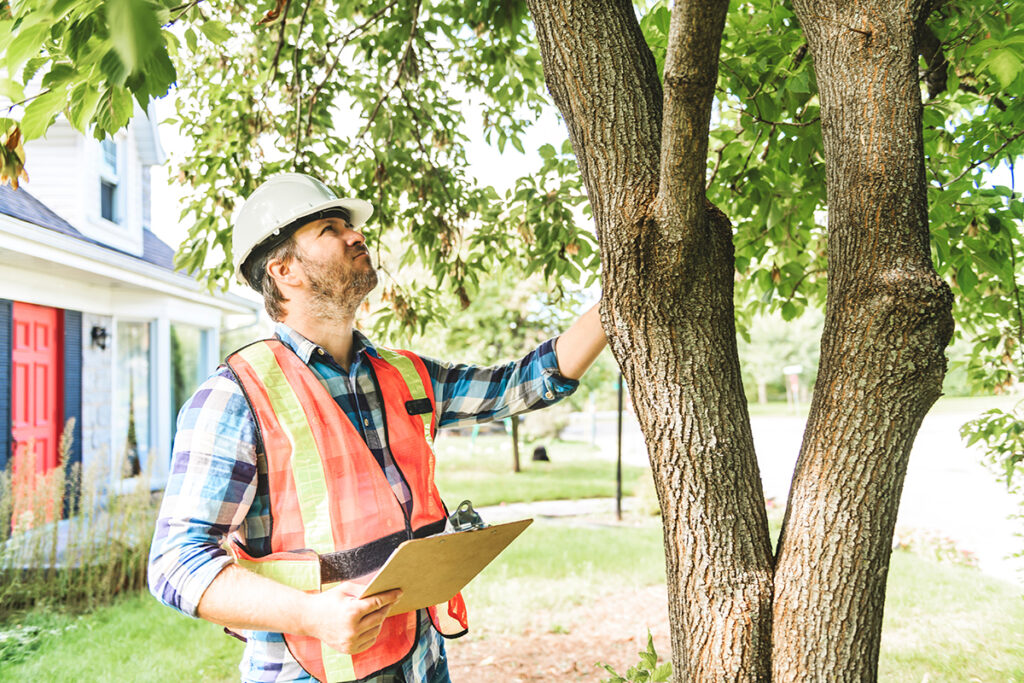
Tree trimming often reveals other needs – a tree that’s beyond help and should be removed, a specimen worth preserving with cabling, or gaps in your canopy where new planting would add value. Our tree pros assess the full picture during every visit so you get straightforward recommendations on what each tree actually needs.
Areas Served
Expert Tree Service provides professional tree trimming and pruning throughout the Hudson Valley and surrounding areas in New York, including Kingston, Saugerties, Woodstock, New Paltz, Rhinebeck, Red Hook, Hudson, Catskill, Poughkeepsie, Highland, and Rosendale.
Frequently Asked Questions About Tree Trimming
Most mature trees benefit from professional trimming every 3-5 years. Younger, faster-growing trees may need attention every 1-2 years as they establish structure. Trees near power lines, roofs, or driveways often need more frequent maintenance to maintain safe clearance. Your specific schedule depends on species, growth rate, and location.
For most deciduous trees, the dormancy period (late fall through early spring) is ideal – you can see the structure clearly and disease transmission risk is lowest. However, dead branches can be removed safely any time of year. Light trimming during the growing season is acceptable for most species. We’ll advise on timing specific to your trees.
No – topping is one of the most harmful things you can do to a tree. It removes the tree’s food-producing canopy, triggers a dense flush of weakly-attached new growth, and destroys natural form permanently. Crown reduction is the correct technique for reducing a tree’s size while maintaining structural integrity and health.
Light pruning of small trees and shrubs with hand pruners is fine for homeowners. But anything requiring a ladder, involving branches over 3-4 inches in diameter, or near power lines should be handled by trained professionals. The cost of professional tree trimming is significantly less than the cost of repairing damage from a DIY job gone wrong.
Costs depend on tree size, species, condition, access, and scope of work. A single small tree might be $200-$500, while a large mature hardwood requiring full-day canopy work could be $1,500-$3,000+. We provide free written estimates so you know the cost before we start.
Proper pruning does not hurt trees – it benefits them. Trees have evolved to compartmentalize wounds and seal off pruning cuts. The key is cutting in the right locations (just outside the branch collar), removing the right amount (never more than 25% of live canopy), and using sharp tools that make clean cuts. Poor technique causes damage; good technique promotes tree health and longevity.
Schedule Your Tree Trimming Consultation
Call 845-331-6782 or fill out the form below to schedule a free on-site assessment. We’ll evaluate your trees, recommend what work is needed, and provide a detailed written estimate. No pressure, no obligation, just honest advice from experienced tree pros.
Recent Posts
- Tree Removal in the Hudson Valley: A County-by-County Guide
 Expert Tree Service has been based in Saugerties since 1936, and our crews work four...
 - Tree Removal in Ulster County, NY: What Every Homeowner Should Know
 Ulster County is our home. Expert Tree Service has been based in Saugerties since 1936,...
 - Tree Removal in Columbia County, NY: What Every Homeowner Should Know
 Columbia County sits just across the Hudson from our Saugerties headquarters, and we’ve been working...