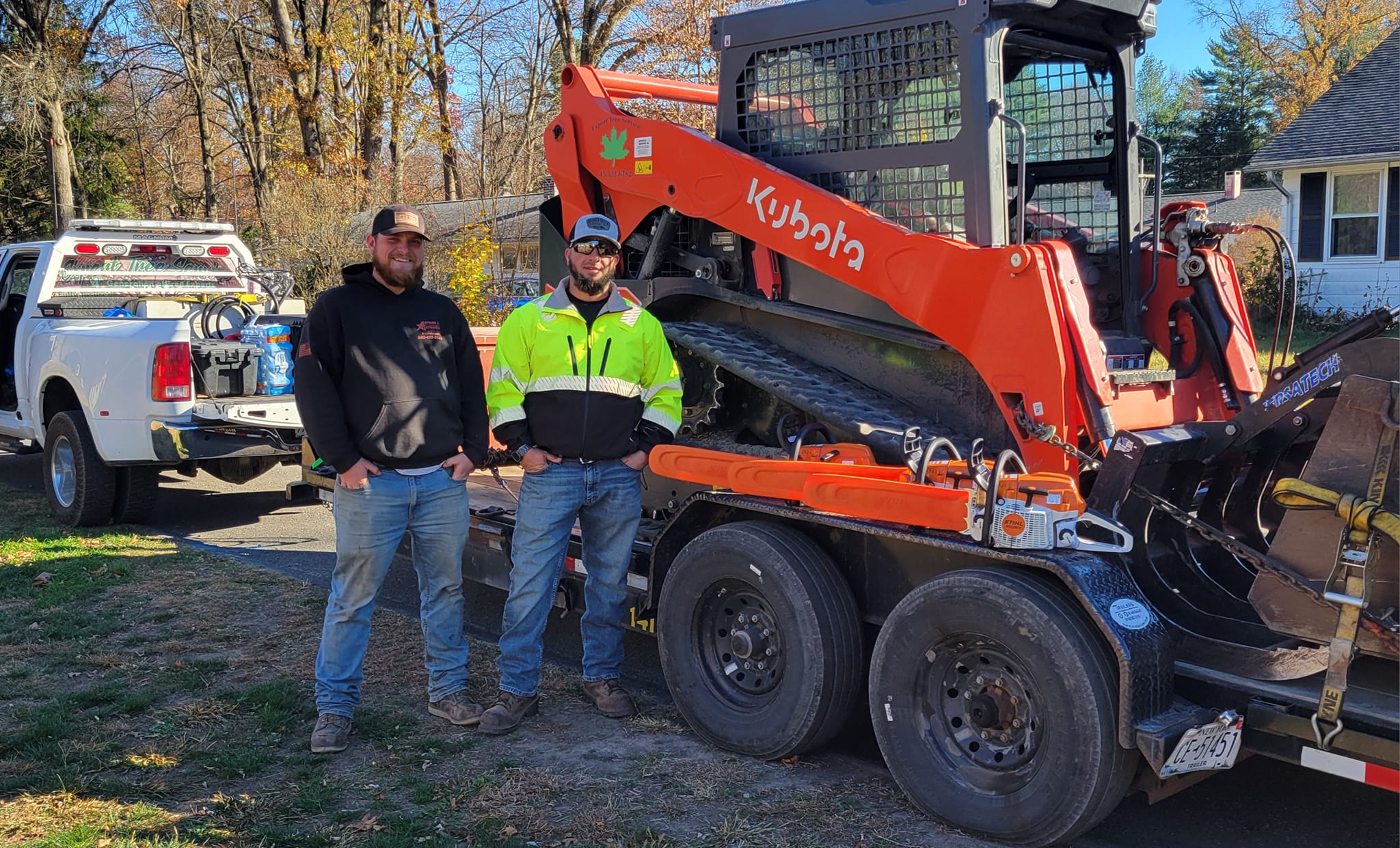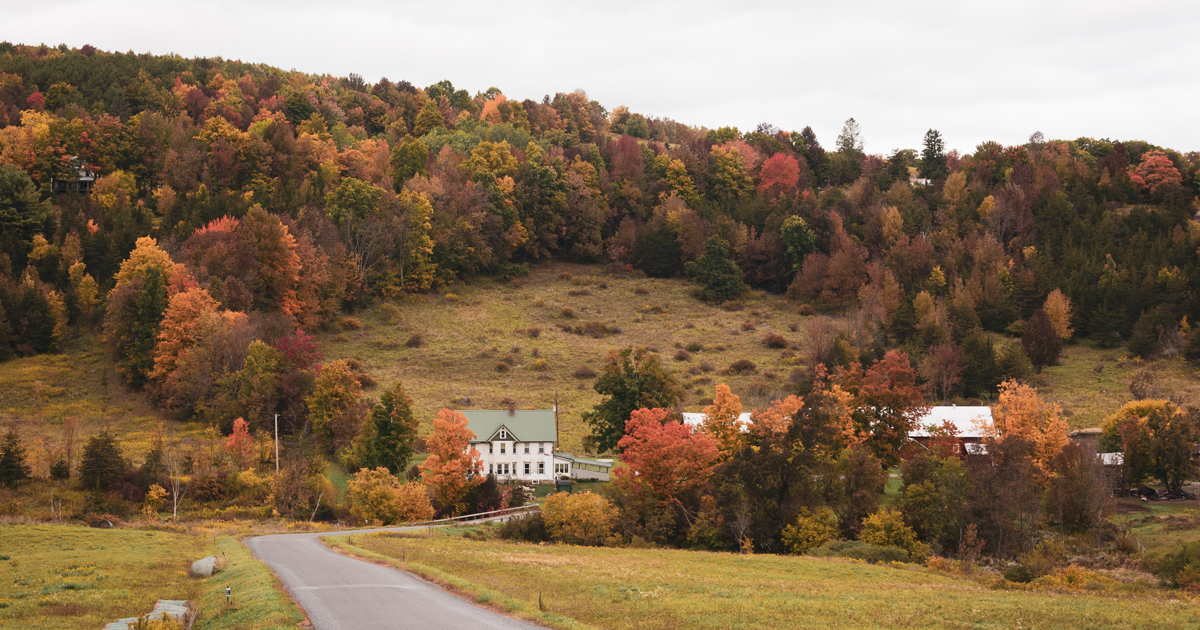
Ulster County is our home. Expert Tree Service has been based in Saugerties since 1936, and after nearly 90 years of working these hills, hollows, and river towns, we believe that no other county in the Hudson Valley asks more of a tree company. Ulster has more standing timber than any county in the Mid-Hudson region, spread across everything from Hudson River floodplain to 4,000-foot Catskill peaks.
That range is exactly why no two jobs are alike when it comes to tree removal in Ulster County. A leaning silver maple in a Kingston backyard, a storm-cracked hemlock above a Woodstock stream, and ten acres of overgrown pasture in New Paltz are three completely different problems. Below is what we’ve learned about all three kinds, with local rules, species that cause the most calls, and what to look for in a tree service here.
Why Ulster County Is Different
Ulster County really has three terrains, and each one grows trees differently.
There are the Hudson River towns. Saugerties, the Town of Ulster, Kingston, Esopus, Highland, and Marlborough sit at low elevation with the mildest winters in the county. The tree mix here looks like the rest of the Mid-Hudson Valley: Norway Maple, Sugar Maple, Silver Maple, and ornamental plantings like Callery Pear and Crabapple near older homes. The most common failure we see in the river towns is a mature maple, often planted 80 to 100 years ago along a street or foundation line, dropping a major limb in a summer thunderstorm.
Then are the Wallkill and Rondout Valley towns. New Paltz, Gardiner, Rosendale, and down through Wawarsing and Ellenville run between the Shawangunk Ridge and the Catskill foothills. The soil here is thin and well-draining along the ridges, with wetlands, creeks, and floodplain in the low ground. Native hardwoods like birches, maples, and oaks, with eastern hemlock white pine dominate. Trees along the floodplain grow fast and shallow-rooted, which means saturated-ground uprooting is a bigger risk here than limb failure.
And finally, there are the Catskill mountain towns, like Woodstock, Hurley, Olive, Shandaken, and Denning. They have higher elevations, shorter growing seasons, heavier snow and ice, and a tree population that shifts hard toward conifers like Eastern Hemlock, White Pine, Norway Spruce. Removals routinely involve steep terrain, long equipment access, and trees leaning over structures that were built close to the woods on purpose. This is where our crane-assisted removal capability earns its keep: a crane lets us take a 90-foot pine down over a Woodstock cabin in sections without a single branch touching the roof.
Ulster County’s Storm Record: What the Numbers Say
We recently pulled two decades of NOAA Storm Events data for the Mid-Hudson region, and Ulster County logged 536 damaging-wind events between 2005 and 2025, roughly one every two weeks, averaged across the year. Region-wide, the pace of damaging-wind events has more than doubled since the late 2000s, and July alone accounts for a quarter of all reports.
Practically, that means that if you have a mature tree with a known defect like a crack, a dead leader, or a lean that got worse over the winter, you cannot hide from a storm. Storm work is a large share of what we do in Ulster County, and we provide 24/7 emergency tree service across the county, from the river towns to the mountain hollows.
The cheaper path is almost always dealing with a compromised tree before the storm does. For trees worth saving, like a split-prone maple with sentimental value, or a big oak with a co-dominant stem, cabling and bracing can be a fraction of the cost of removal.
Tree Removal Rules in Ulster County, Town by Town
There is no county-wide tree removal permit in Ulster County: the rules are set town by town, and they vary more than most homeowners expect. The quick version:
In Kingston, trees between the sidewalk and the street are almost always city-owned, and the fine for removing one without authorization jumped to $1,250 in 2024. The city has also been weighing a tree preservation ordinance that would require permits for removing trees 6″ in diameter or larger, even on private property.
In New Paltz, the village regulates “shade trees” along public rights-of-way, and the rules differ between the village and the town. Details in our Hudson Valley tree law guide.
In Ellenville, no permit is needed, but village law makes owners responsible for removing dead or incurably diseased trees.
Near Esopus Creek and mapped wetlands, the DEC’s expanded freshwater wetland rules (in effect since January 2025) added over a million acres of jurisdiction statewide. Most routine tree removal near the creek is covered by a simple general permit, but noncompliance fines run $5,000 to $50,000. Here’s what actually requires a DEC permit.
Most other towns, such as Saugerties, Woodstock, Rosendale, Gardiner and Hurley,have no residential tree removal permit as of this writing. The main trap is the wetland adjacency rule above, which applies regardless of town.
Not sure which situation you’re in? Call us at 845-331-6782; we deal with these rules every week and can usually tell you where you stand in one conversation.
The Trees That Cause the Most Removal Calls in Ulster County
By terrain, the repeat offenders:
In the river towns, it’s aging Silver Maples and Norway Maples, which are fast-growing, weak-wooded, and now 80+ years old in many Kingston and Saugerties neighborhoods. Also Callery (Bradford) Pears, which self-destruct almost on schedule at 20–25 years.
In the valleys and on the ridges, shallow-rooted floodplain trees that uproot in saturated ground, and White Ash everywhere. The emerald ash borer has killed the overwhelming majority of Ulster County’s ash, and a standing dead ash gets dangerously brittle fast: it’s the one species we tell homeowners not to wait on, and often the one we won’t climb, which makes it crane or bucket work.
In the mountain towns, Eastern Hemlock is under sustained attack from the hemlock woolly adelgid, and tall White Pines that snap in ice storms. A hemlock on a saturated Shandaken hillside is in danger of uprooting whole.
For the full rundown of the pests driving these failures, see our guide to the invasive species killing Hudson Valley trees.
Land Clearing in Ulster County
Land clearing is its own discipline here, and Ulster County throws everything at it: rocky, gravelly ridge soil that eats equipment, old stone walls hiding in second-growth woods, wetland edges that need to be respected, and slopes that limit machine access.
We handle land clearing across Ulster County at building sites, overgrown pasture reclamation, fence lines, and view corridors. We have our own excavators, forestry mulcher, and grinders, so nothing ever waits on a subcontractor. Forestry mulching in particular suits Ulster properties: it clears brush and small trees without stripping topsoil or leaving burn piles, which matters on thin ridge soils.
Choosing a Tree Service in Ulster County
Whoever you hire, insist on three things:
- Proof of insurance, both liability and workers’ comp, sent directly from the insurer (tree work is among the most dangerous trades, and an uninsured crew’s injury on your property can become your problem).
- Real local references from your town, not a review widget.
- Equipment matched to the job. If a company quotes a big removal over a structure without mentioning how they’ll control the wood on the way down, keep calling.
Our guide to finding the best tree removal company covers the full checklist. For commercial properties, see our guide for Ulster and Dutchess County businesses.
Where We Work in Ulster County
We’re based in Saugerties and work the entire county every week:
- Tree removal in Kingston, NY
- Tree removal in Saugerties, NY
- Tree removal in New Paltz, NY
- Tree removal in Woodstock, NY
- Tree removal in Rosendale, NY
- Tree removal in Ellenville, NY
Plus Hurley, Esopus, Highland, Gardiner, Marlborough, Plattekill, the Town of Ulster, and the mountain towns up Route 28.
Get a Free Tree Removal Estimate in Ulster County
Four generations of our family have taken care of Ulster County’s trees. Whether it’s one hazardous maple over your roof or ten acres that need clearing, we’ll give you a straight assessment and a free estimate. Call 845-331-6782 or request an estimate online.