Every tree company will tell you storm season is busy. We wanted to know exactly how busy, when, and where, so we pulled 21 years of federal storm records for the four counties we serve.
The National Weather Service logs every damaging storm event in the country — what happened, where, when, and what it destroyed — in NOAA’s Storm Events Database. It’s public. Anyone can check our numbers. We went through every recorded event in Ulster, Dutchess, Greene, and Columbia counties from 2005 through 2025: 4,564 events in all, including 1,929 damaging-wind events — the kind that bring trees down.
Here’s what two decades of data say about falling trees in the Hudson Valley.
One in Three Storm Reports Here Involves a Downed Tree
When a National Weather Service event is logged, it comes with a written narrative of what actually happened. In our four counties, 1,488 of the 4,564 narratives — one in three — explicitly mention trees coming down. And that’s one in three of all recorded events, a list that includes heat waves, floods, and cold snaps that couldn’t topple a sapling.
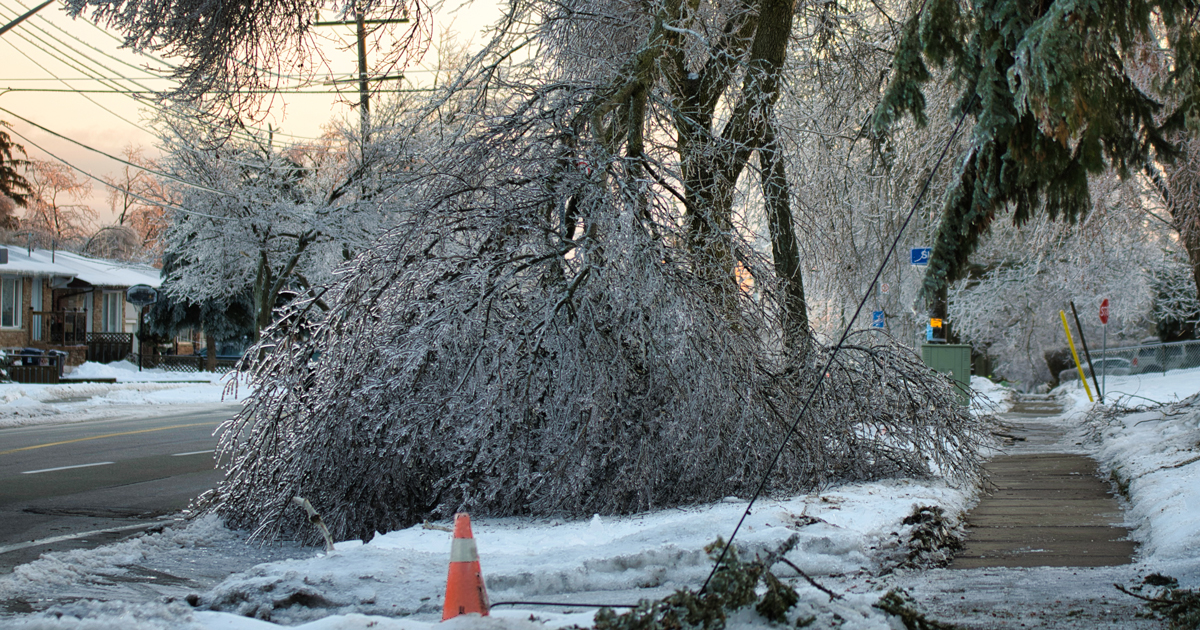
Read the wind reports alone and the database is essentially a 21-year logbook of Hudson Valley trees hitting roads, wires, houses, and cars.
July Is the Worst Month — By a Landslide
If you tallied damaging-wind events by month across 21 years, here’s the shape of the year:
- July: 486 events — the runaway peak
- August: 287
- June: 232
- May: 168
- Every other month: between 56 and 132
Put another way: July alone produces nearly as many damaging-wind events (486) as November, December, January, February, March, and April combined (500). The image most people carry — trees coming down in winter nor’easters — is real but backwards as a ranking. It’s the summer thunderstorm season, when trees are in full leaf and catching wind like sails on saturated summer soil, that fills the record books.
The biggest single days in the database tell the same story. July 12–13, 2022. July 24, 2022. July 27, 2023 — 28 separate damaging-wind reports across our counties in one afternoon. July 16, 2024. The exceptions prove the rule: the May 15, 2018 outbreak that spun up two tornadoes, and big autumn blows like September 18, 2012 and September 7, 2023.
The Pace Has More Than Doubled
Recorded damaging-wind events in the four counties, by five-year block:
- 2005–2009: about 57 per year
- 2010–2014: about 62 per year
- 2015–2019: about 105 per year
- 2020–2025: about 135 per year
An honest caveat: some of that climb reflects better detection and reporting by the National Weather Service over time, not just wilder weather. But the direction is unmistakable, it matches what federal climate assessments project for the Northeast — more frequent heavy-precipitation and severe-wind events — and it matches what we see from the bucket truck: saturated ground, full canopies, and wind arriving together, more often.
County by County
Damaging-wind events, 2005–2025:
- Columbia County: 610
- Dutchess County: 564
- Ulster County: 536
- Greene County: 219
One note on fairness: event counts partly track where people are. Greene County’s lower number reflects fewer reports from a sparsely populated county at least as much as calmer skies — anyone who’s been on the mountaintop in Windham or Tannersville during a front knows Greene doesn’t get a pass from the wind.
The Records No One Wants to Be In
The database also records what falling trees have cost this region beyond property. Among the entries, no names, all public record:
- December 2006, Wawarsing: high winds blew a tree onto an apartment building, through the roof, killing a person inside.
- August 2020, Taconic State Parkway: a thunderstorm dropped a tree across the northbound lanes onto a passing car, killing a passenger.
- June 2024, Dutchess County: a tree fell onto a mobile home, killing an elderly man.
- October 2025, eastern Ulster County: a large tree fell onto a vehicle on U.S. Route 44; one person died at the scene.
In all, the tree-related entries in these four counties record seven deaths and seven injuries over 21 years. These aren’t freak events from somewhere else. They’re our roads.
What to Do With This Information
The data points to a few practical conclusions:
- Don’t wait for “storm season” — you’re in it. The peak window is June through August, and July is its center. The best time to have your trees assessed is before the next front, not after.
- Full-leaf trees fail differently. Summer canopies catch enormous wind loads, and summer downpours soften root plates. A tree that shrugged off January gusts can go over in a July thunderstorm.
- The warning signs are knowable. Dead limbs, thinning crown, fungus at the base, a new lean, soil heaving on one side. As we covered in our post on what New York courts say about falling-tree liability, the law turns on whether a hazard was readily observable — and observable hazards are exactly what an inspection finds.
- If a storm does drop a tree, don’t touch it. Downed trees under tension are dangerous in ways that aren’t visible. See what to do when a tree falls on your property, then call.
We’ve been handling Hudson Valley storm work since 1936, with 24/7 emergency response across Ulster, Dutchess, Greene, and Columbia counties. If you have a tree you’re wondering about — especially one near the house, the driveway, or the road — call 845-331-6782 for a free assessment before the next line of storms shows up on radar.