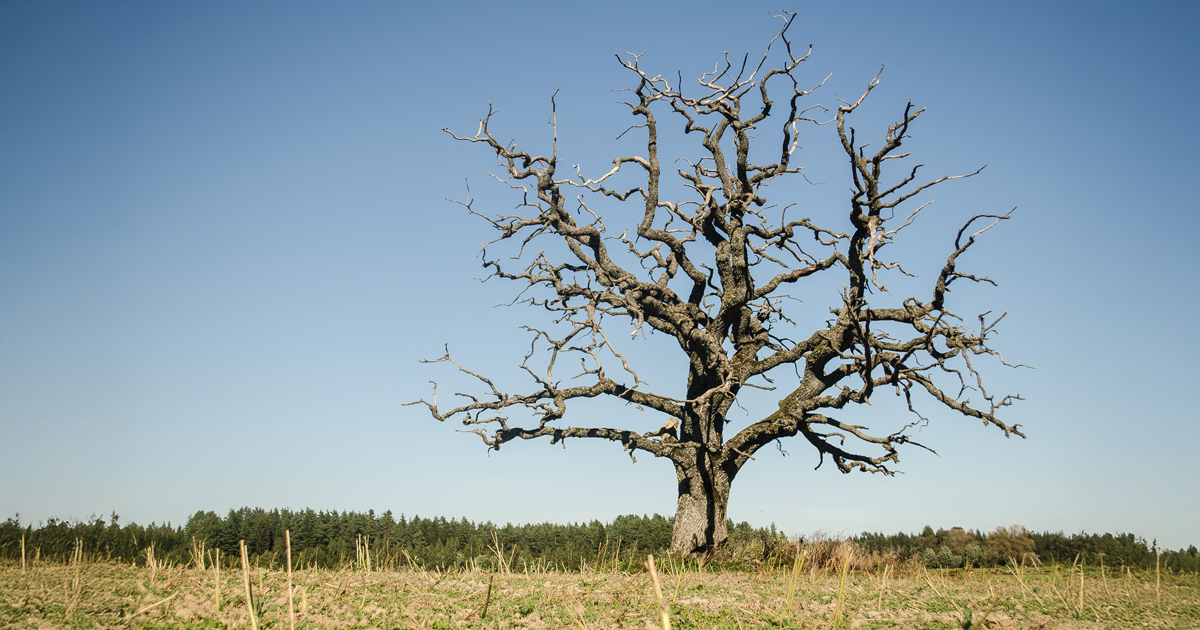
If you’ve noticed bare branches in June, mushrooms climbing up the trunk, or a slow lean that wasn’t there last year, you’re probably asking the same question hundreds of Hudson Valley homeowners ask us every season: is my tree dying, or can it be saved?
The answer depends on what you’re seeing and how early you catch it. Some trees that look terrible in spring are just slow to wake up. Others that appear perfectly healthy on the outside are already beyond saving, what arborists call “zombie trees.”
This guide pulls together nearly 90 years of field experience from Expert Tree Service in Saugerties to help you evaluate your trees, understand what the warning signs mean, and decide when it’s time to call a professional. We serve homeowners across Ulster, Dutchess, Greene, and Columbia counties, from Kingston and New Paltz to Rhinebeck, Catskill, and everywhere in between.
Dead or Just Dormant? Three Quick Tests
Every spring, we get calls from worried homeowners whose trees haven’t leafed out yet while the neighbors’ trees are already full and green. Before you panic, try these three tests:
The Scratch Test is the fastest way to check. Use a fingernail or pocket knife to scrape a small patch of bark off a young branch. If the layer underneath is green and moist, the branch is alive. If it’s brown and dry, that branch may be dead—but one dead branch doesn’t mean the whole tree is gone.
The Bud Check comes next. Look for small buds on the branches, even tiny ones that haven’t opened yet. Buds mean the tree is investing energy in new growth, which is a positive sign.
Finally, try the Flex Test. Gently bend a small twig. A living twig will flex and feel supple. A dead one snaps cleanly with a dry crack.
If it’s late May or early June and your tree fails all three tests, there’s a good chance it’s beyond saving. But if even one branch shows green, the tree may still be fighting.
Seven Warning Signs Your Tree Is in Serious Trouble
Some problems are obvious; others develop slowly over years. Here are the red flags our crews look for during every evaluation:
- Mushrooms or fungal growth at the base of the tree or along major roots. Fungi feed on decaying wood, so their presence usually means internal rot is already underway.
- Deep vertical cracks or splits in the trunk. Frost cracks and lightning damage can open pathways for disease and weaken the tree’s structural core.
- More than 50% of the crown is dead or dying. When over half the leaf canopy is gone, the tree can no longer produce enough energy through photosynthesis to sustain itself.
- Hollow or soft trunk areas. Press your hand against the trunk. If it feels spongy, gives way, or sounds hollow when you knock, internal decay may be advanced.
- Leaning with visible root upheaval. A tree that has recently shifted, especially with soil mounding on one side or exposed roots on the other, may be losing its anchor.
- Large dead limbs in the upper canopy. High deadwood is a falling hazard and often signals systemic decline rather than localized damage.
- Sparse or stunted leaf cover, especially at the crown. If your tree is producing fewer, smaller, or discolored leaves each year, it may be in a downward spiral.
If you’re seeing two or more of these signs, especially after a harsh winter or major storm, it’s time to get a professional assessment.
Zombie Trees: When a Tree Looks Healthy but Isn’t
A “zombie tree” is a tree that appears alive from the outside—it may even have leaves—but is already dying or dead internally. The term captures one of the most dangerous situations a homeowner can face, because there’s no visible warning before a heavy limb drops or the entire tree fails.
What Causes a Zombie Tree?
Several factors can hollow out or kill a tree from the inside while the outer bark still looks normal:
- Diseases and fungal infections such as Dutch elm disease, oak wilt, and various canker diseases that attack the vascular system
- Invasive pests like the emerald ash borer, woolly adelgid, elongate hemlock scale, and carpenter ants that bore into the wood
- Extreme weather events including high winds, lightning strikes, heavy snow loads, and ice storms that cause internal structural fractures
- Root damage from construction, soil compaction, or root rot that prevents the tree from absorbing water and nutrients
- Old age, as trees naturally weaken over decades, and their internal defenses slow down
How to Spot a Zombie Tree
Look for cracks or cavities in the trunk, dead or brittle branches mixed in with healthy-looking ones, fungus or mushrooms growing on the bark or near the base, a subtle lean that has worsened over time, a lack of new growth despite the season, and sparse leaf cover at the crown even when lower branches look fine.
If you suspect a zombie tree on your property, do not wait for it to drop a limb. Call us at 845-331-6782 for a professional evaluation.
Tree Cavities: When Are Holes in Your Tree Dangerous?
Tree cavities are common across the Hudson Valley, and they aren’t always a death sentence. Many trees live for decades with hollow trunks or large holes, as long as the remaining wood walls are structurally sound.
What Causes Tree Cavities?
Cavities form from improper pruning that leaves open wounds, mechanical damage from lawn equipment or vehicles, animal activity like woodpecker drilling, storm damage that strips bark, and fungal infections that cause internal rot.
Should You Fill a Tree Cavity?
No. Filling holes with cement, spray foam, or other materials traps moisture inside and accelerates decay. Trees have a natural defense called compartmentalization—they wall off damaged areas to stop rot from spreading. Filling a cavity disrupts that process.
When a Cavity Becomes Dangerous
A tree cavity is cause for concern when it sits at the base of the tree and extends into the root system, when it compromises more than about 30% of the trunk’s diameter, when you see visible decay or soft crumbly wood around the opening, when the cavity faces prevailing winds and could catch gusts like a sail, or when the tree is leaning and has extensive cavities on the lean side.
In these situations, professional intervention such as cabling, bracing, or removal may be necessary to keep your property and family safe.
Your Seasonal Tree Inspection Checklist
Early spring in the Hudson Valley, right as the snow melts, is the ideal time to evaluate your trees after winter’s punishment. Here’s what to check:
- Inspect trunks and major branches for splits, cracks, or peeling bark. These could indicate disease, pest infestation, or frost damage.
- Check leaf buds. Healthy buds should be firm and plump. Shriveled or discolored buds are a warning sign.
- Look at emerging leaves for spots, holes, discoloration, or wilting. Abnormal leaves often signal fungal or bacterial problems.
- Search for pest activity: holes in bark, sawdust-like frass, webs, or egg masses. Borers, caterpillars, and scale insects are all active in the Hudson Valley.
- Evaluate overall canopy health. Is the tree filling in evenly? Sparse, lopsided, or thinning crowns may indicate root problems or internal disease.
- Note winter damage. Look for branches bent or broken by ice, snow, or wind. Consider whether the tree weathered the season worse than its neighbors.
- Check neighboring trees. Tree diseases spread between trees, so symptoms on one tree may predict trouble for nearby ones.
- Take photos and keep records. Photographing the same tree each spring creates a visual timeline that makes year-over-year decline much easier to spot.
If anything looks off during your inspection, it’s worth getting a professional opinion before a small problem becomes an emergency.
How Regular Tree Trimming Prevents Decline
The best defense against a dying tree is regular professional maintenance. Many of the problems described in this guide, with zombie trees, dangerous cavities, disease spread, can be caught early or prevented entirely through routine trimming.
Trimming Removes Disease Before It Spreads
Professional trimming targets dead, diseased, or damaged branches before decay-producing fungi can penetrate deeper into the tree. Removing a single infected limb today can save the entire tree tomorrow.
Better Airflow Fights Fungal Infections
A dense, overgrown canopy traps moisture against branches and leaves, creating ideal conditions for fungal growth. Strategic thinning improves air circulation and allows branches to dry faster after rain, significantly reducing disease risk.
Structural Pruning Reduces Storm Damage
Trees with properly maintained structure are far less likely to lose major limbs in high winds or heavy snow. Regular trimming eliminates weak branch attachments and balances the canopy’s weight distribution, making the tree more resilient to the storms that frequently roll through the Hudson Valley.
The 25% Rule
Never remove more than 25% of a tree’s canopy in a single season. Over-pruning stresses the tree and can trigger a decline that’s worse than the original problem. This is one reason to hire professionals rather than attempt major trimming yourself.
When It’s Time to Remove a Tree
No one wants to lose a tree, especially one that’s been part of your property for decades. But there are situations where removal is the safest and smartest choice:
- The tree fails the scratch test on multiple major branches and shows no sign of new growth by early June
- More than 50% of the crown is dead, and the decline has been progressing over multiple seasons
- The trunk is structurally compromised with large cavities, deep cracks, or significant lean with root upheaval
- The tree has been identified as a zombie tree, i.e., alive on the outside, dead or dying inside
- Storm damage removed over 40% of the canopy with ragged, splintered breaks rather than clean ones
- The tree is dead and stands near your home, driveway, power lines, or areas where people walk
If you’re on the fence, a professional evaluation can help you make a confident decision. Sometimes a tree that looks far gone can be saved with the right care, and sometimes one that looks fine is a hidden hazard.
Common Questions About Sick Trees
Can a Tree Survive a Lightning Strike?
It depends on the severity. If only the outer bark is damaged and the tree is otherwise healthy, it may recover with time and proper care. But if lightning split the trunk or destroyed the vascular system, the tree may become structurally unsafe. Always have a lightning-struck tree evaluated by an arborist before assuming it will be fine.
Will Fertilizing or Watering Save a Dying Tree?
It can help—but only if the problem is nutrient deficiency or drought stress. If the underlying issue is pests, disease, or internal decay, fertilizing won’t fix it and may actually accelerate the decline by feeding the organisms causing the problem. A soil test or arborist consultation can tell you whether fertilization is worth the investment.
Stressed Tree vs. Dying Tree: What’s the Difference?
A stressed tree shows early warning signs like wilting leaves, minor dieback at branch tips, or stunted seasonal growth. With better care—proper watering, mulching, and pest management—a stressed tree can often recover. A dying tree, on the other hand, shows more permanent and severe symptoms: large dead branches, trunk rot, significant lean, or major leaf loss that doesn’t improve season to season.
Not Sure About Your Tree? We’ll Take a Look.
Expert Tree Service has been helping Hudson Valley homeowners protect their properties and their trees since 1936. Whether you need a quick evaluation, strategic trimming to extend your tree’s life, or safe removal of a hazard tree, our licensed crews are ready to help.
Call us at 845-331-6782 for a professional tree assessment. We’re available 24/7 for emergencies across Ulster County, Dutchess County, Greene County, and Columbia County.